Designing with Intelligence: How AI Supports Design Engineering
Today’s architectural industry is defined by increasing complexity. Projects demand expressive forms, strict compliance, and seamless collaboration across disciplines. Artificial Intelligence (AI) is increasingly used to support engineers, helping automate routine tasks and improve accuracy without compromising design intent.
Practical Applications in Design
As engineers, we balance technical rigor with creative thinking. Tasks like compliance checks, layouts optimization, device placement often consume hours that could be spent on innovation. By handling these repetitive or data-intensive tasks, AI allows more time to focus on higher-level, creative, and strategic aspects of design, ultimately improving both efficiency and design quality.
AI can enhance workflows in tangible ways:
- Generative Design: Explore multiple design options for complex spaces based on constraints such as cost, sustainability, and aesthetics.
- Clash Detection & Coordination: Predict conflicts early using historical project data, reducing rework and improving collaboration.
- Performance Evaluation: Analyze HVAC efficiency, lighting comfort, or energy consumption and identify potential improvements.
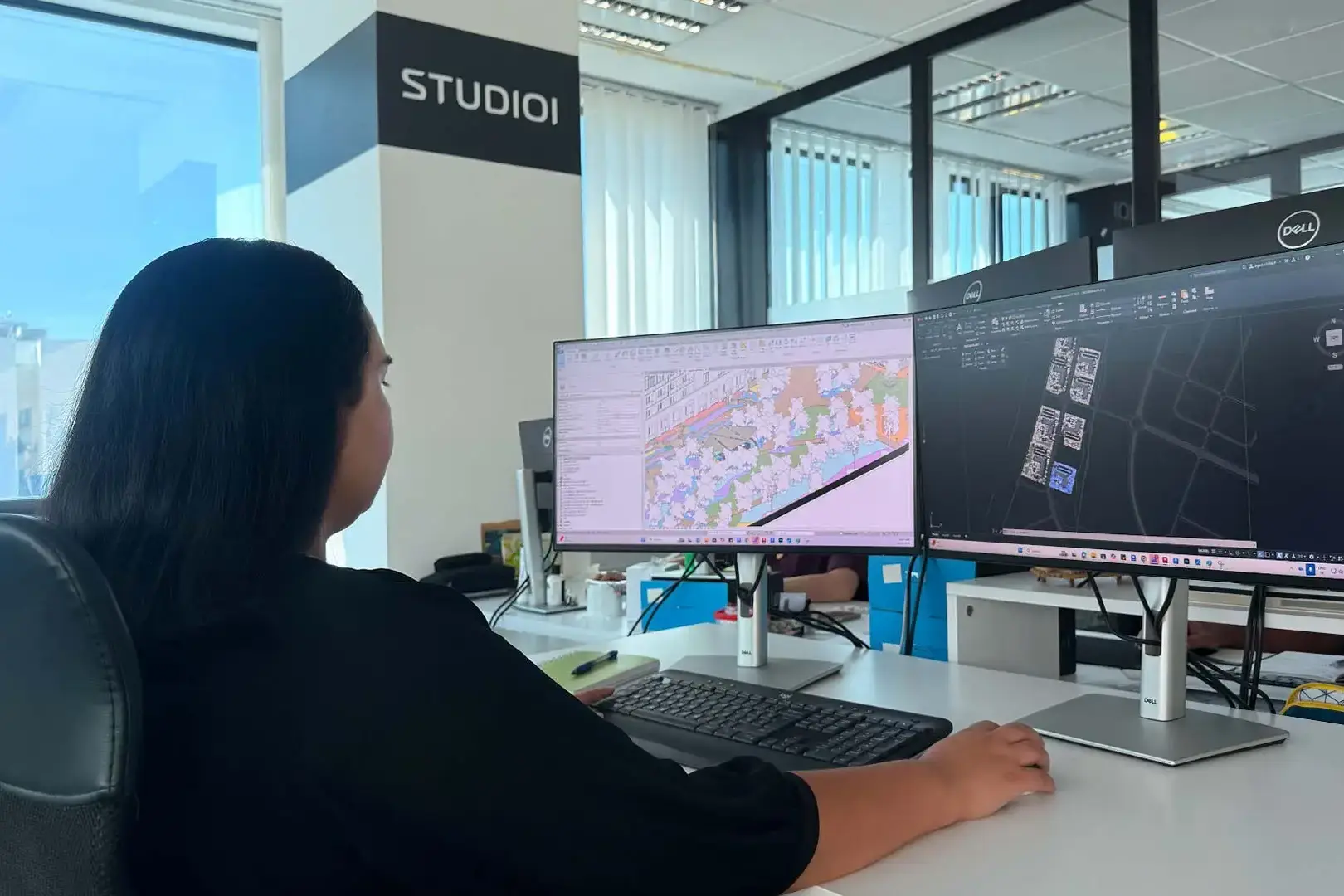
At STUDIOI, we integrate these tools selectively within BIM workflows to accelerate precise, informed decision-making, especially on complex projects with tight schedules.
Learning From Projects
One of AI’s most valuable strengths in engineering is its ability to analyze data from past projects – covering design layouts, system integrations, and installation challenges. By learning from previous decisions and outcomes, AI tools can highlight potential conflicts, optimize models and layouts, and suggest design improvements tailored to specific building systems.
Over time, this creates a project-specific knowledge base that helps engineering teams make faster, more informed decisions, improving both efficiency and system reliability while ensuring human expertise remains central to critical design choices.
Designing Smarter, Not Harder
AI tools are effective only when supported by accurate data, thoughtful workflow integration, and ongoing human oversight. Engineers remain the decision-makers, with AI supporting precision, reducing repetitive work, and allowing teams to focus on higher-value, creative tasks.
Integrating AI into our workflows is about enhancing efficiency, accuracy, and collaboration without replacing creativity. In my experience, using these tools in BIM makes design processes smoother and allows us to focus on solutions that are innovative, functional, and aligned with project vision.
At STUDIOI, we apply AI tools judiciously to support our teams – helping maintain design quality, ensure compliance, and streamline technical tasks while keeping creativity and human judgment at the center of every project.
Author:
Tarek Hesham, Senior ELV Engineer
Related Articles
June 12, 2026
Nima Alborz Recognised in Construction Week’s Power 150 List 2026
Nima Alborz, CEO and Co-Founder of STUDIOI, has been featured in Construction…
April 1, 2026
The Project Management Trends Shaping Modern Delivery
Project management is rapidly evolving as teams become more connected, digital,…
February 3, 2026
Balancing Design Freedom and BIM Precision
In a fast-paced architectural environment like Dubai, design ambition often…